
Browse All Records(204 total)
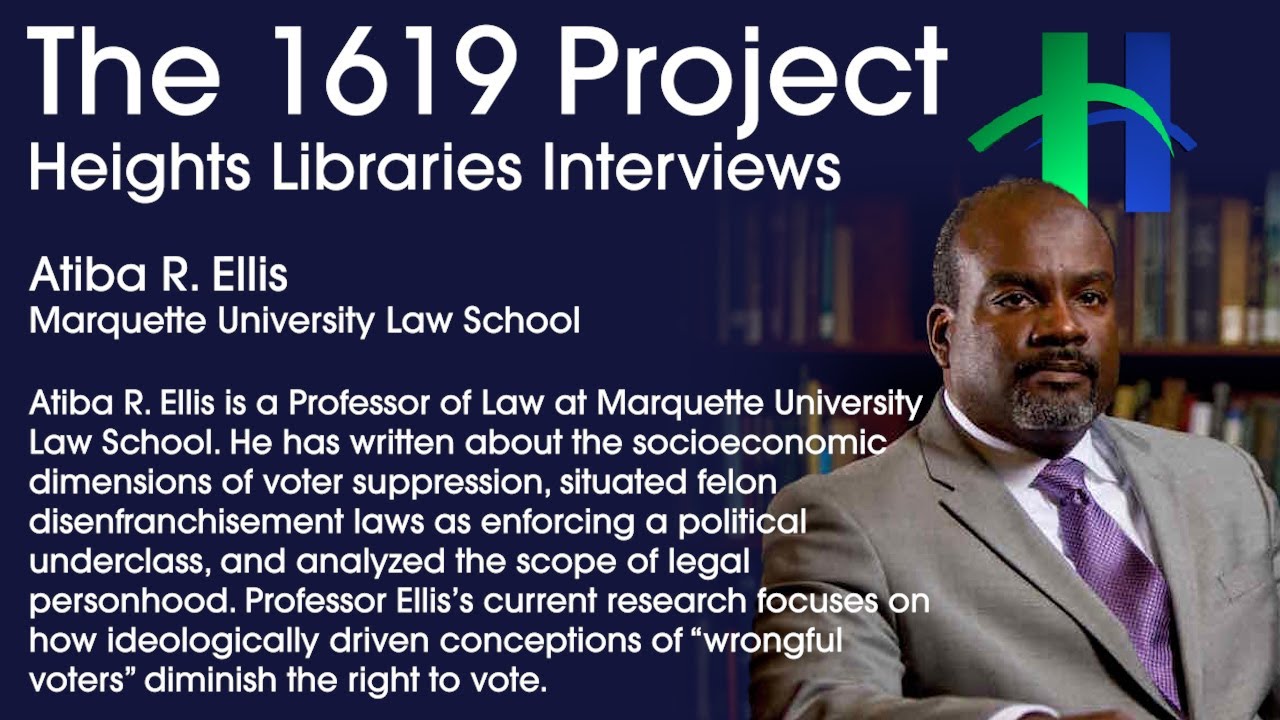
Atiba Ellis: Polley V. Ratcliff
Atiba R. Ellis is a Professor of Law at Marquette University Law School. Professor Ellis discusses his essay "Polley V. Ratcliff: A New Way To Adress an Original Sin?" A fascinating court case, recently resolved, involving kidnapping, slavery, and freedom which might serve as a roadmap for a type of Truth and Reconciliation style reparation. Prof. Ellis explains how the past is still alive and able to be resolved today.
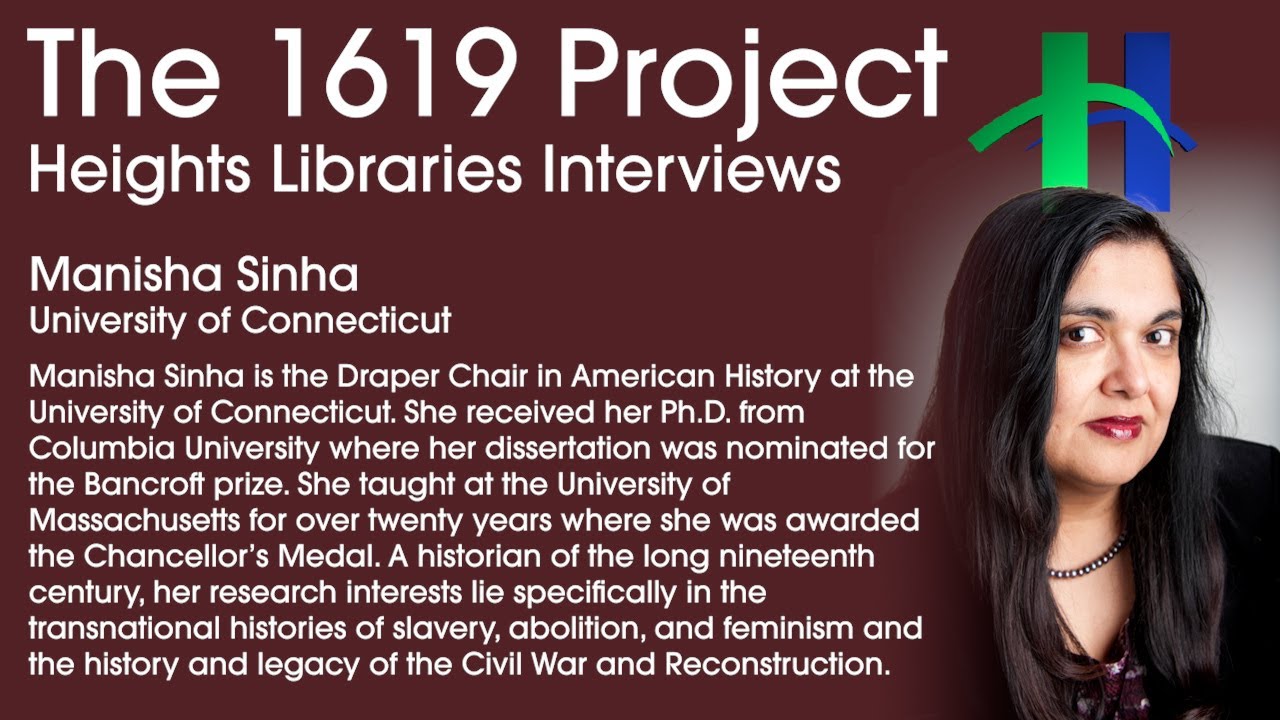
Manisha Shina: History of Reparations
A historian of the long nineteenth century, her research interests lie specifically in the transnational histories of slavery, abolition, and feminism and the history and legacy of the Civil War and Reconstruction. She is currently writing a book on the Reconstruction of American democracy after the Civil War. Manisha Sinha is the Draper Chair in American History at the University of Connecticut. She received her Ph.D from Columbia University where her dissertation was nominated for the Bancroft…
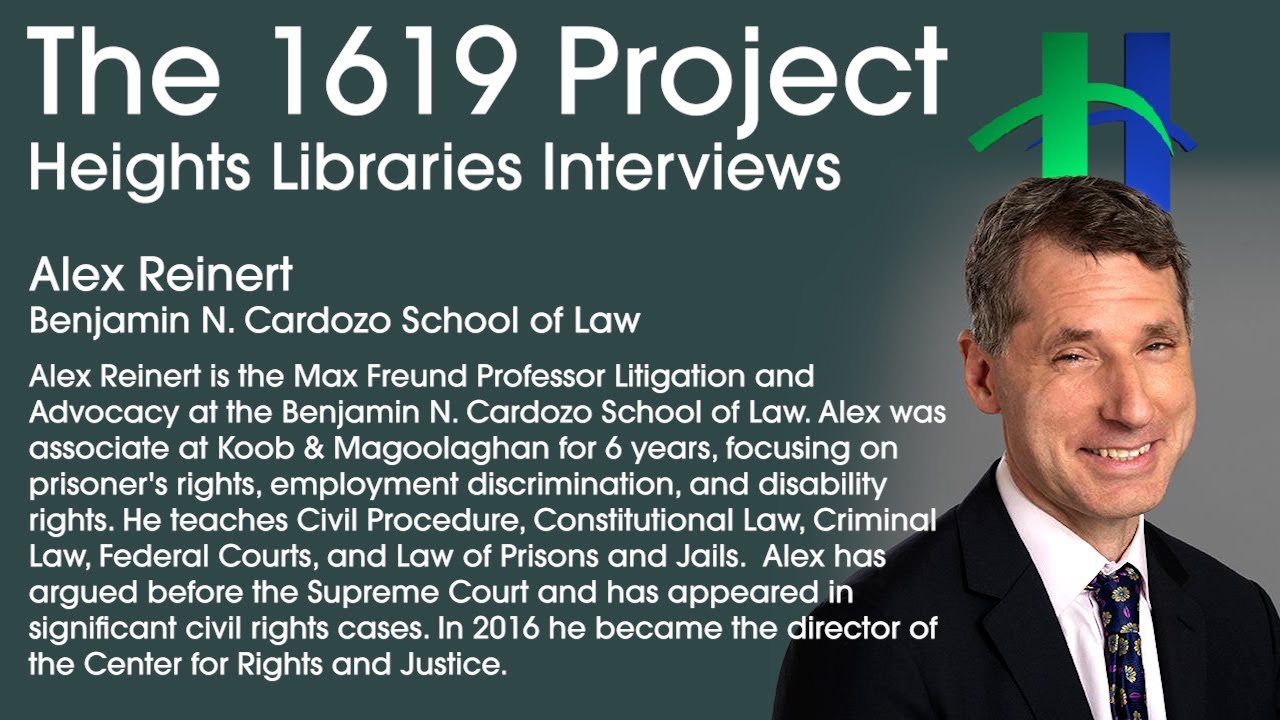
Alex Reinert: 8th Amendment Debate
Alex Reinert is the Max Freund Professor Litigation and Advocacy at the Benjamin N. Cardozo School of Law. Prof. Reinert discusses his article "Reconceptualizing the Eighth Amendment: Slaves, Prisoners, and 'Cruel and Unusual' Punishment." Prof. Reinert talks about "the law of slavery" and how little we have travelled from the 1870s to today when it comes to the understanding of "cruel and unsual" punishment as the standard of imprisonment.
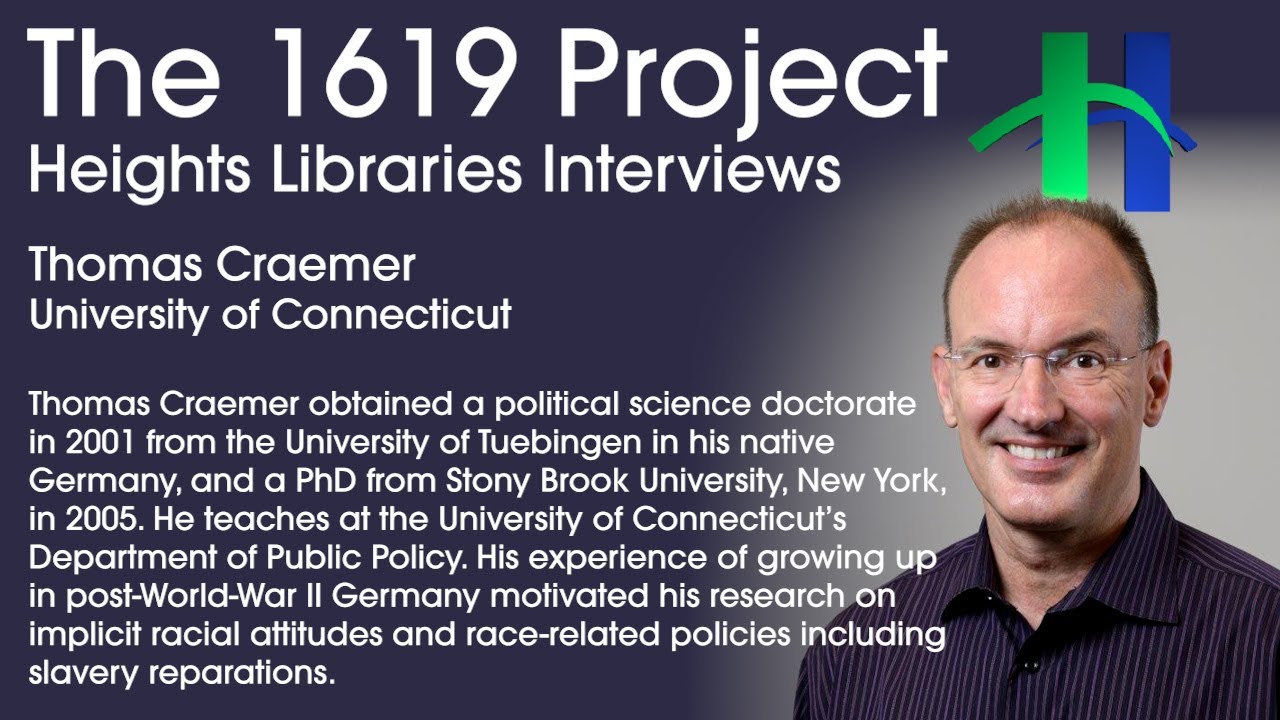
Thomas Craemer: Estimating the Cost of Reparations
Thomas Craemer obtained a political science doctorate in 2001 from the University of Tuebingen in his native Germany, and a PhD from Stony Brook University, New York, in 2005. He teaches at the University of Connecticut’s Department of Public Policy. His experience of growing up in post-World-War II Germany motivated his research on implicit racial attitudes and race-related policies including slavery reparations. In 2015, he published an article titled Estimating Slavery Reparations that has…
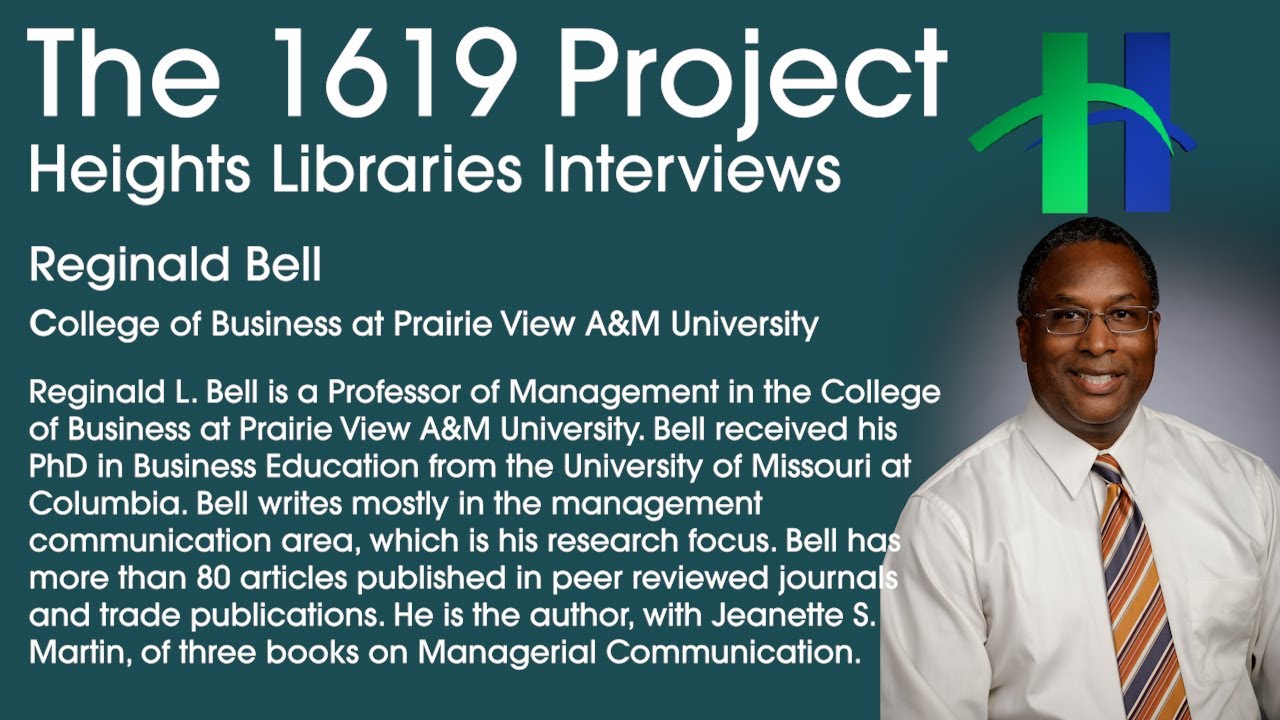
Reginald Bell: Black Slave Owners
Reginald L. Bell is a Professor of Management in the College of Business at Prairie View A&M University. Bell received his PhD in Business Education from the University of Missouri at Columbia. Bell writes mostly in the management communication area, which is his research focus. Bell has more than 80 articles published in peer reviewed journals and trade publications. He is the author, with Jeanette S. Martin, of three books on Managerial Communication. Dr. Bell discusses his article…
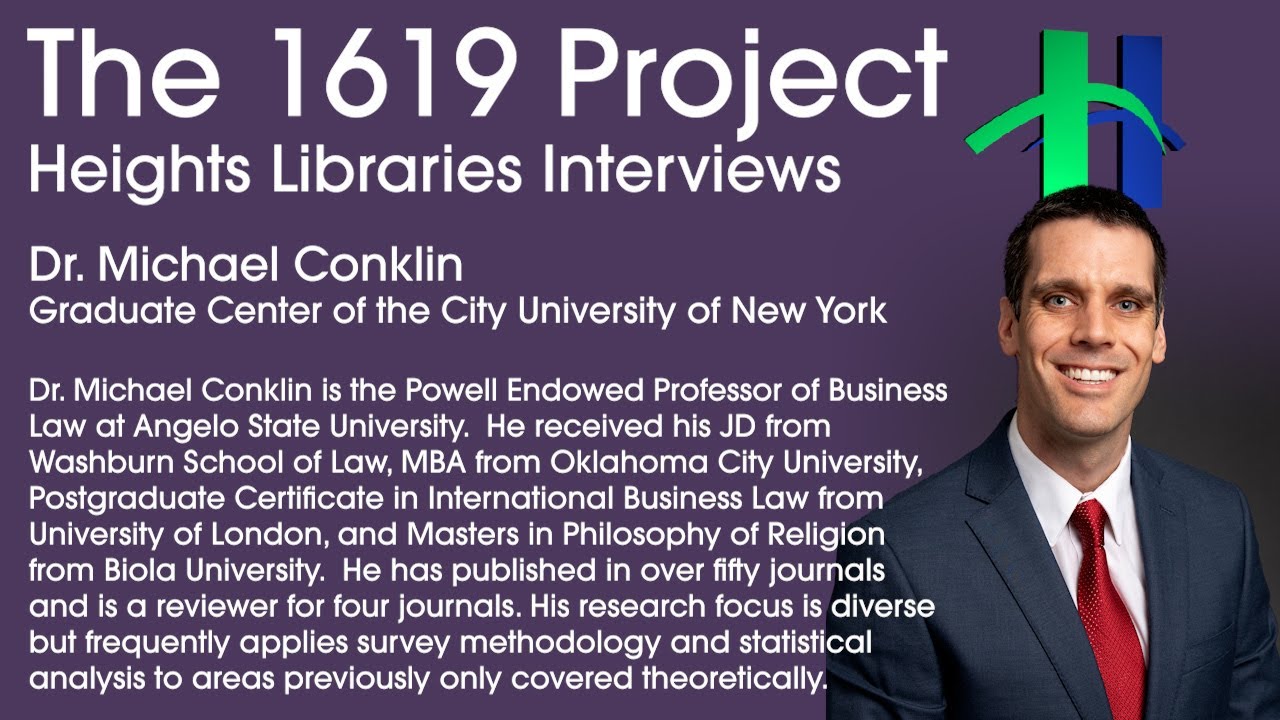
Michael Conklin: Public Opinion of Reparations
In this interview we discuss Prof. Conklin's paper An Unhill Battle for Reparationists: A Quantitative Analysis of the Effectiveness of Slavery Reparations Rhetoric. Prof. Conklin walks us through his research on normal citizen's attitudes toward granting or recieving reparations. The findings are often at odds with conventional assumptions.
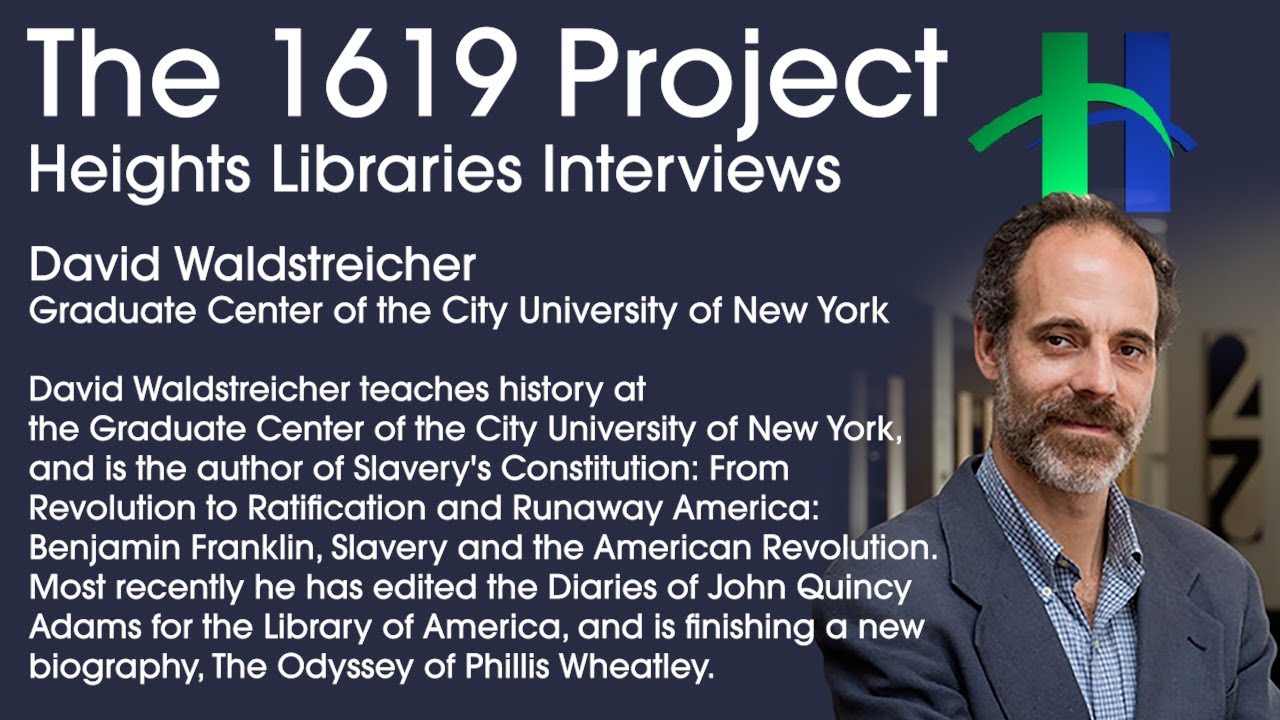
David Waldstreicher: Historians and the 1619 Debate
Professor Waldstreicher discusses his book "Slavery's Constitution: From Revolution to Ratification." Specifically focusing in on the slavery compromises written into the US Constitution - we go into some depth about 3/5th Compromise which enshrined slavery as a means of governing. Next Prof. Waldstreicher explains his position on the New York Times' 1619 Project, specifically focused on his Boston Review article "The Hidden Stakes of the 1619 Controversy."
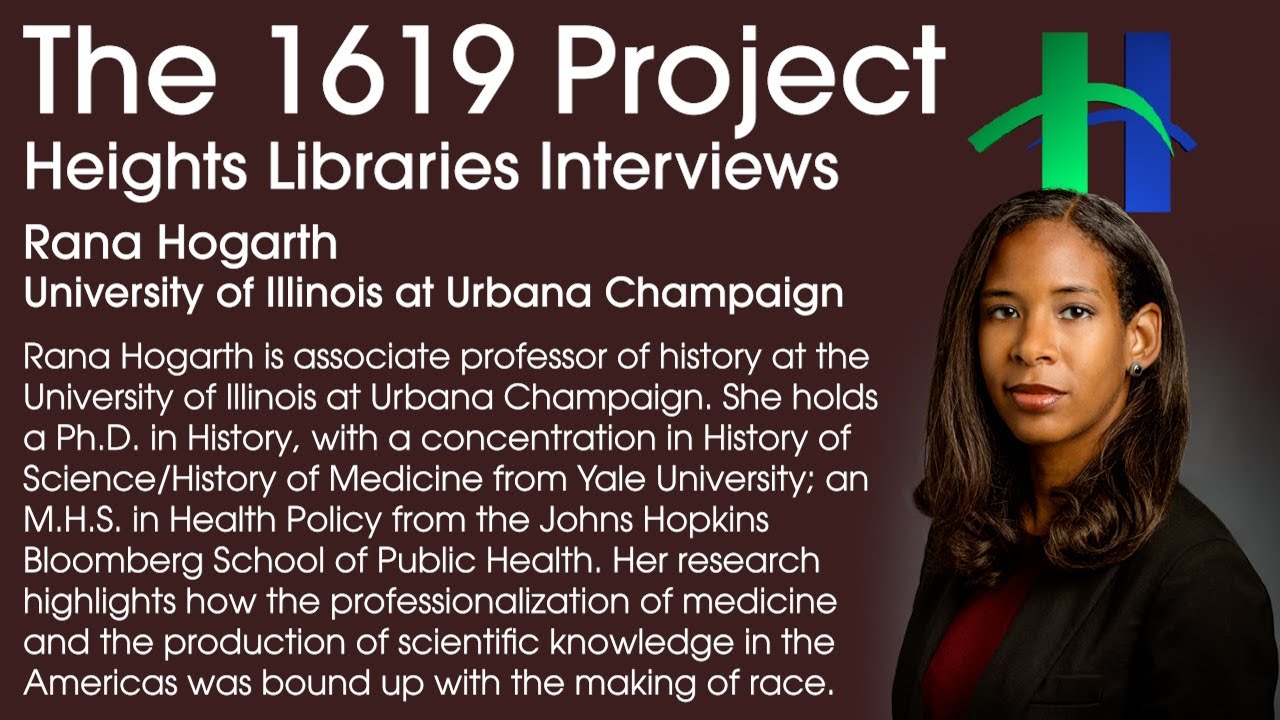
Rana Hogarth: Slavery and Medicine
Professor Hogarth discusses her research into how the professionalization of medicine and the production of scientific knowledge in the Americas was bound up with the making of race. We talk about her first book, "Medicalizing Blackness: Making Racial Difference in the Atlantic World, 1780-1840" and how white physicians defined blackness as a medically significant marker of difference in slave societies of the American Atlantic. And the legacy slave bodies had on the foundations of…
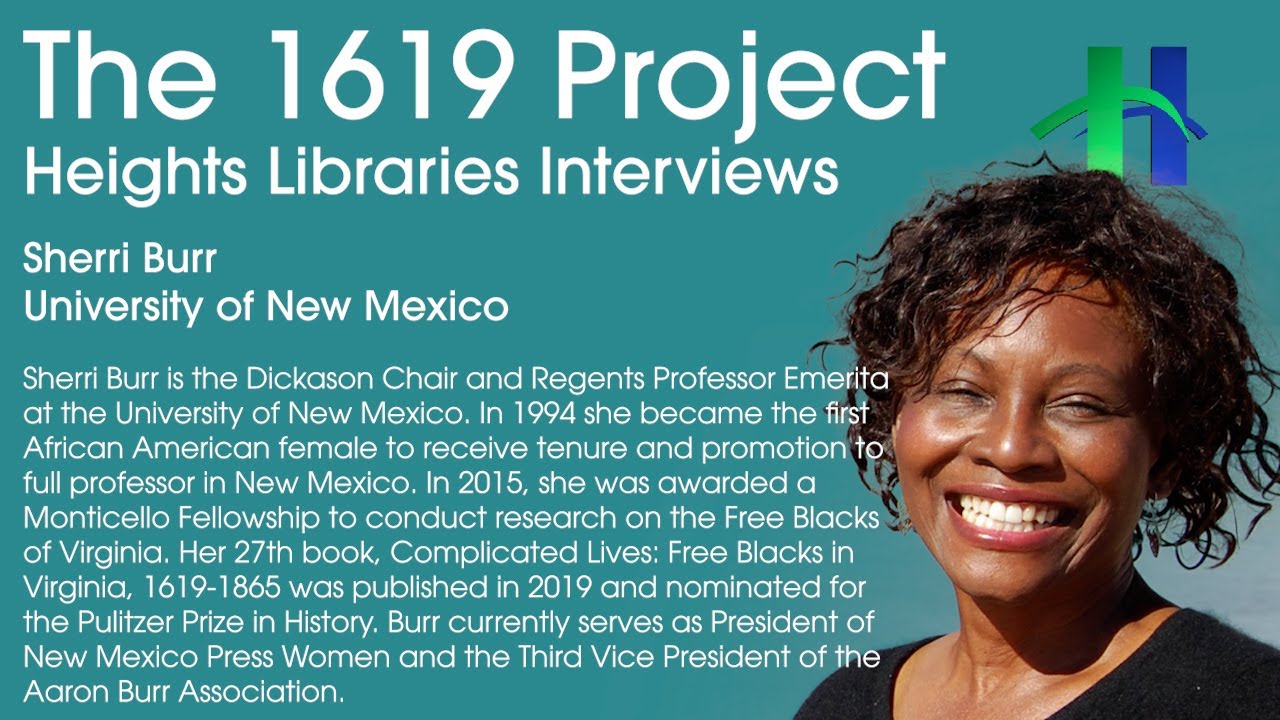
Sherri Burr: Free Blacks of Virginia
In 2015, she was awarded a Monticello Fellowship to conduct research on the Free Blacks of Virginia, the hundreds of thousands of African-Americans who were free before the Civil War. Burr’s ancestors were among this group. Professor Burr discusses her research which became her 27th book, "Complicated Lives: Free Blacks in Virginia, 1619-1865."
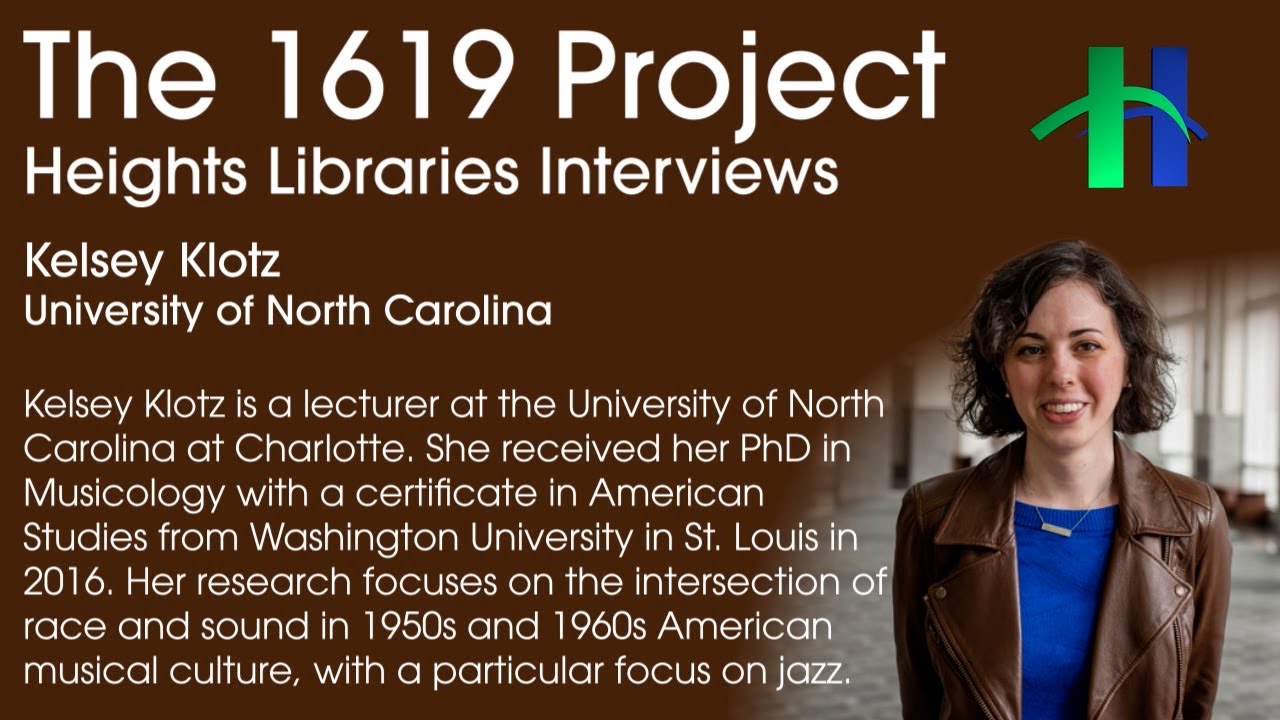
Kelsey Klotz: Dave Brubeck's Civil Rights Advocacy
Kelsey Klotz discusses her research on the intersection of race and sound in 1950s and 1960s American music, with a focus on jazz. She published her first book "Dave Brubeck and the Performance of Whiteness," which uses Brubeck’s mid-century performance of whiteness across his professional, private, and political lives as a starting point to understand mid-century whiteness, privilege, and white supremacy, more fully.
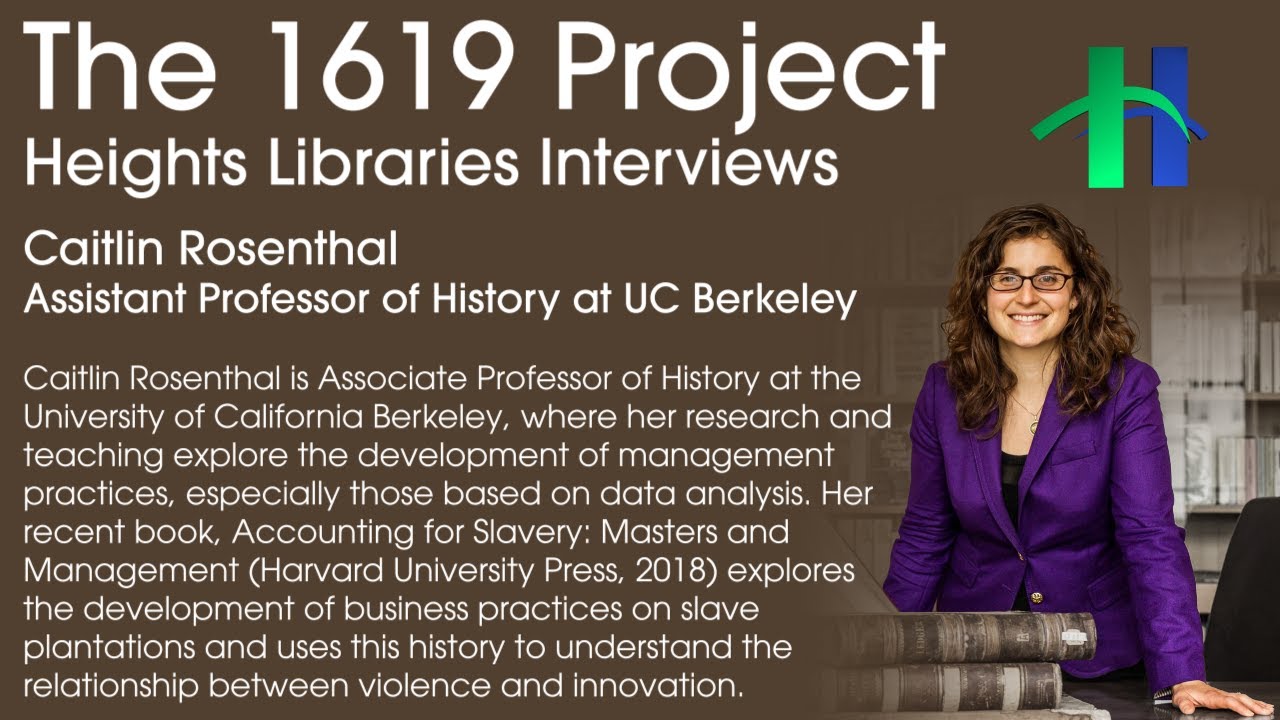
Caitlin Rosenthal: Capitalist Management of Slavery
Caitlin Rosenthal discusses her book, "Accounting for Slavery: Masters and Management," won the Simpkins Award of the Southern Historical Association as well as the first book prize of the Economic History Society. It was also featured as a "Five Books" best book in economics for 2018. The book explores the development of business practices on slave plantations and uses this history to understand the relationship between slave plantation management, violence, and innovation
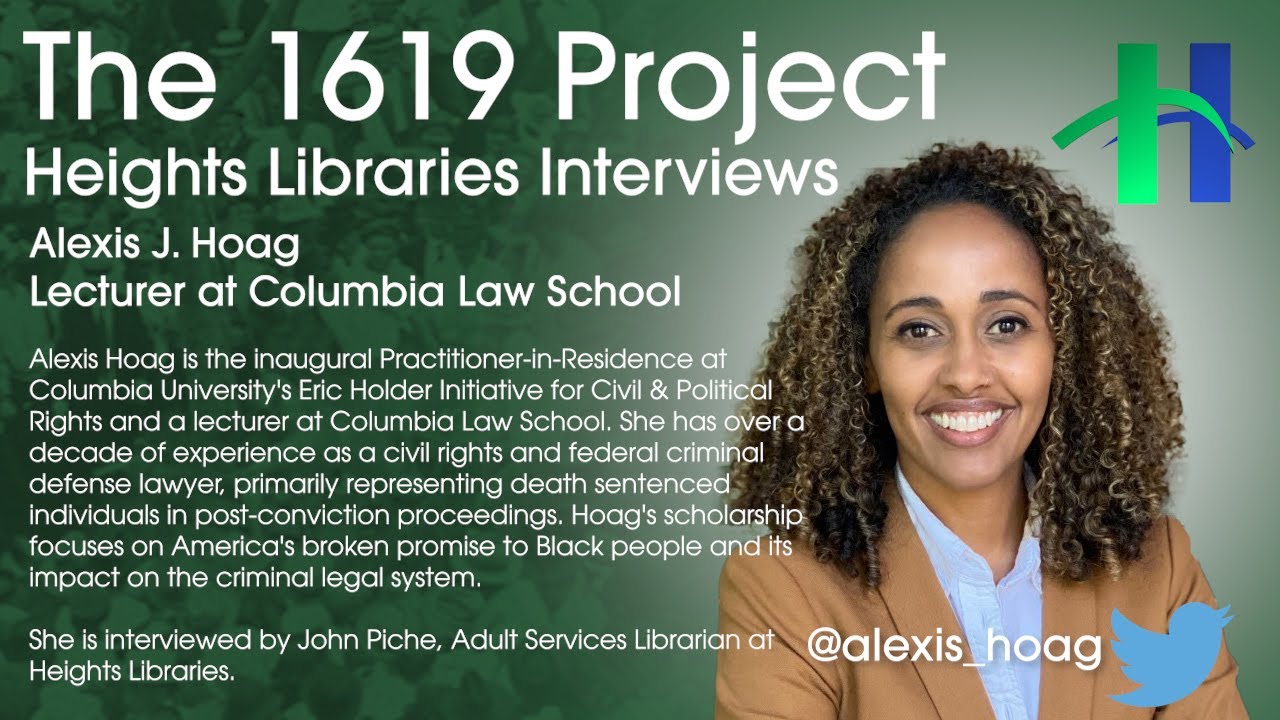
Alexis Hoag: Race and the Death Penalty
Alexis Hoag, Practitioner in Residence at Columbia Law School’s Holder Initiative, discusses the systemic racial issues at the heart of our Judicial system. Professor Hoag is an anti-death penalty advocate who recently published, "Valuing Black Lives: A Case for Ending the Death Penalty" and argued before the Ohio Supreme Court advocating for Glen Bates.
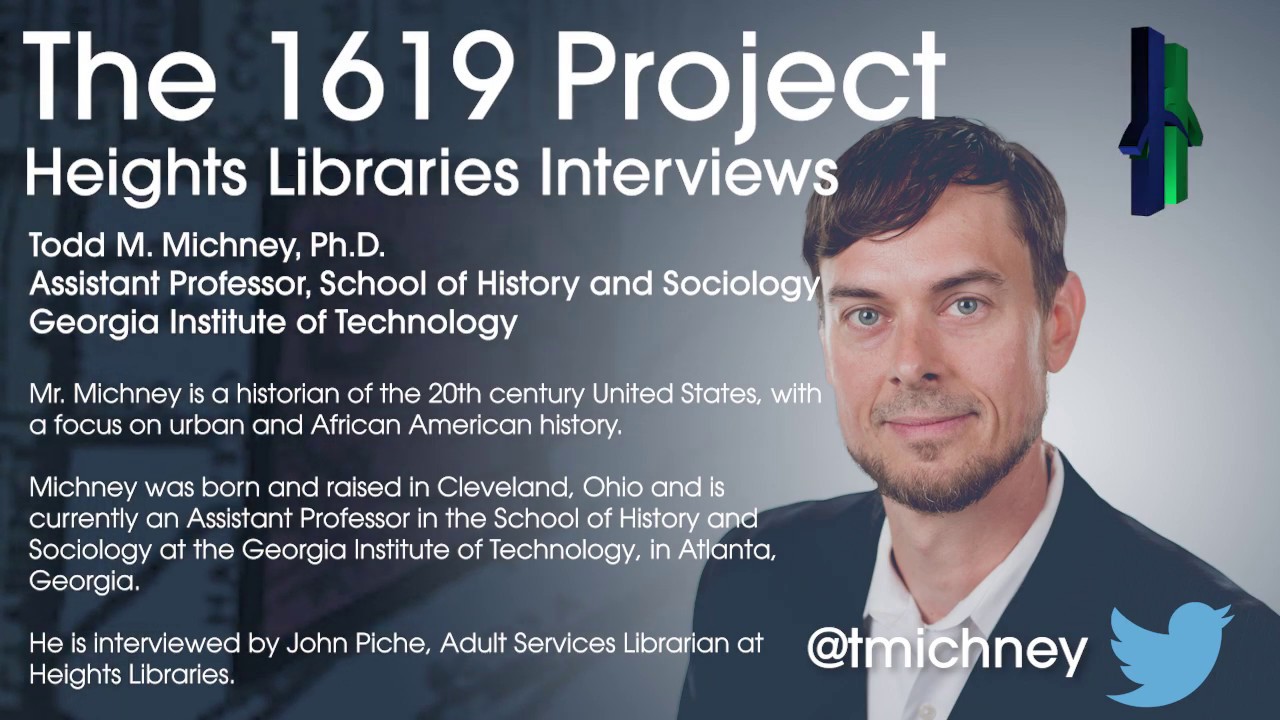
Todd Michney: Redlining and Home Owners Loan Company
In this inaugural session of the Heights Library Unpacking Our History interviews, we talk to Todd M. Michney, who shares insights from his book "Surrogate Suburbs: Black Upward Mobility and Neighborhood Change in Cleveland, 1900–1980," about redlining and the HOLC's role in housing discrimination.
Sang Hea Kil: Covering the Border War
How the news media create crime, race, nation, and the USA-Mexico divide examines border newspaper coverage of the USA-Mexico divide and how the nation and immigration are racially imagined in crime news discourse, where whiteness is associated with order and brownness is associated with disorder in a variety of imaginative, nativist ways. By applying critical discourse analysis methodology to the Los Angeles Times, Arizona Republic, Albuquerque Journal, and Houston Chronicle during a peak epoch…
Rana Hogarth: Eugenics After Slavery
Eugenicists’ study of mixed race people with Black and white ancestry did not emerge in a vacuum. Slavery not only gave rise to myths about mixed race people’s bodies that eugenicists would later study, but it also left behind an elaborate systems that eugenicists would rely on to classify mixed race people for years to come. This talk highlights slavery’s little studied role in the development of eugenicists’ opinions about the fitness of mixed race people with Black and white ancestry in the…
Olivarius: Disease, Slavery, and Politics in New Orleans
Antebellum New Orleans sat at the heart of America’s slave and cotton kingdoms. But it was also the nation’s "necropolis," with epidemic yellow fever killing thousands each summer and leaving countless more orphaned, widowed, and bereaved. Olivarius shows how this city became stratified between the "acclimated" and "unacclimated," why these immunity labels mattered, and how yellow fever was mobilized by white elites to further divide and exploit the population.…
Christopher Willoughby: What Modern Medicine Gained from Slavery
Medical science in antebellum America was a paradox: it presumed African Americans to be less than human yet still human enough to be useful as experimental subjects, as cadavers, and for use in the training of medical students. Professor Willoughby will discuss how false beliefs defined American medicine and how the impact is still being felt today. Christopher D.E. Willoughby is an Assistant Professor of African American and African Diaspora Studies at the University of Nevada, Las Vegas. He…
Jessica Katzenstein: Problems in Police Training
Police reform advocates often push police departments to move from fear-laden “warrior” survival trainings and toward reality-based or scenario trainings, which involve immersive role-playing scenarios such as making an arrest. Scenario trainings promise to teach officers to suppress fear, counter racial bias, and calibrate “reasonable” uses of force. But these trainings often fall short of their promise and end up reinforcing the threats and survival mindset. Drawing on 16 months of…
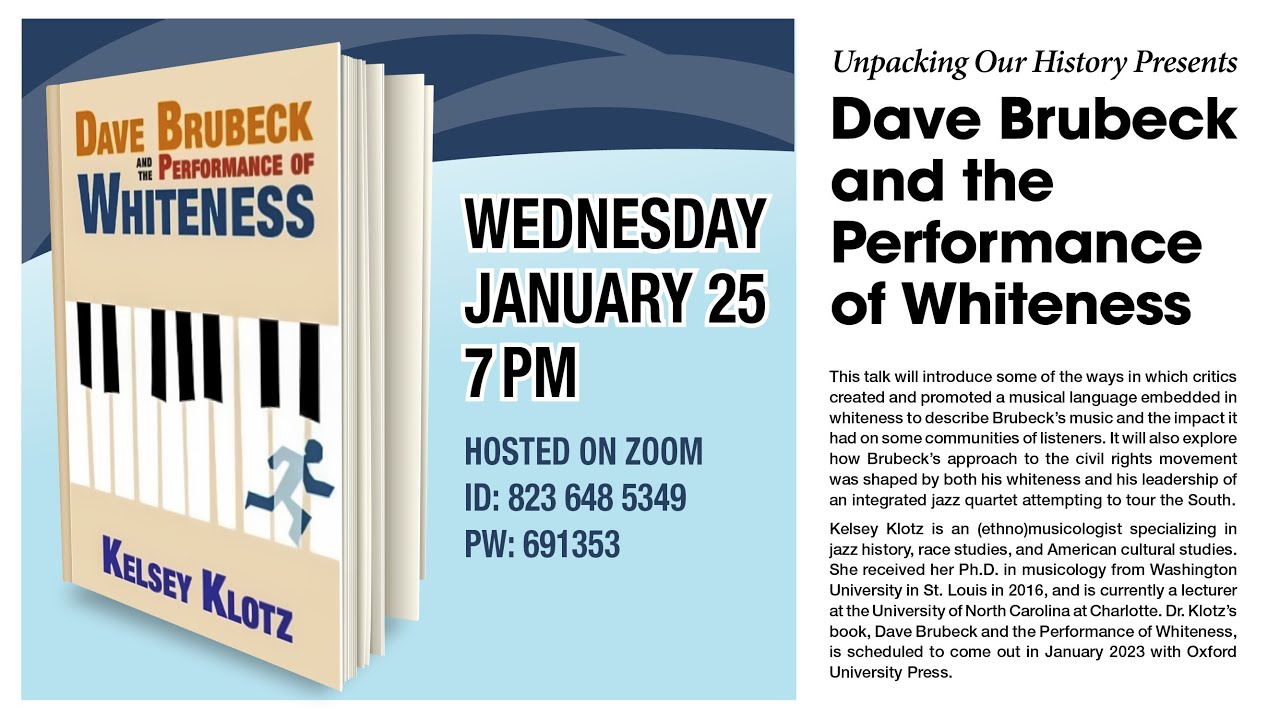
Kelsey Klotz: Dave Brubeck and the Performance of Whitenes
Dr. Kelsey Klotz’s book, Dave Brubeck and the Performance of Whiteness, is scheduled to come out in January 2023 with Oxford University Press. Drawing on archival records, recordings, and previously conducted interviews, Dave Brubeck and the Performance of Whiteness listens closely for the complex and shifting frames of mid-century whiteness and white supremacy, and how they shaped the experiences of Brubeck, his critics, and his audiences. This talk will introduce some of the ways in which…
Alison Skinner-Dorkenoo: The Water We Swim In: An Examination of Systemic Influences on Our Attitudes
This talk will make the case that systemic forms of oppression are maintained and reinforced through subtle patterns of thought and behavior, and present some paths through which those systems can be challenged. Dr. Skinner-Dorkenoo has been an assistant professor at the University of Georgia since the fall of 2019.
Thomas Craemer: Holocaust and Slavery Reparations
Professor Thomas Craemer grew up in post-World War II Germany. One day, he met a Holocaust survivor who had retired from Israel to Germany of all places. For four decades, Mieciu Langer had received a reparations pension from the (West) German government. If reparations have the power to bring about reconciliation in this case, then reparations from the US Government to the Black descendants of the formerly enslaved might bring about racial reconciliation in the United States as well. Thomas…
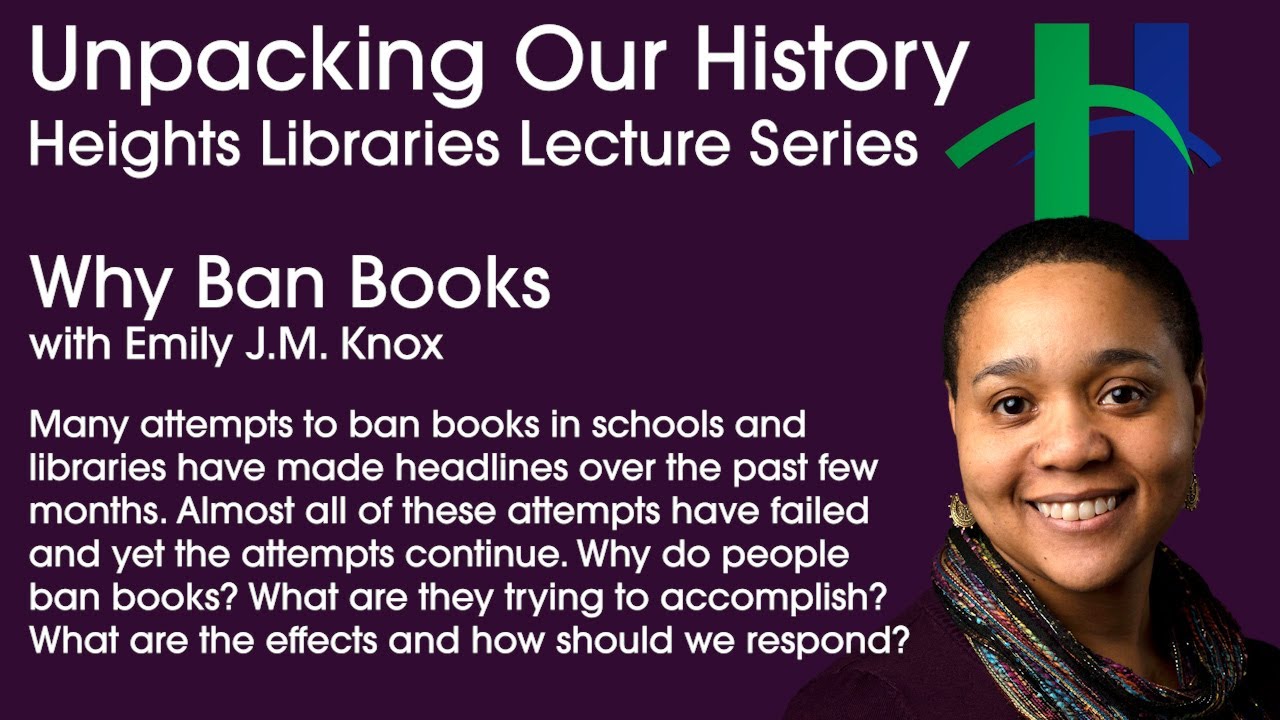
Emily J. M. Knox: Why Ban Books? Understanding the Discourse of Censorship and Its Effects
Many attempts to ban books in schools and libraries have made headlines over the past few months. Almost all of these attempts have failed and yet the attempts continue. Why do people ban books? What are they trying to accomplish? What are the effects and how should we respond? Emily Knox is an associate professor in the School of Information Sciences at the University of Illinois Urbana-Champaign. Her book, Book Banning in 21st Century America (Rowman & Littlefield) is the first monograph…
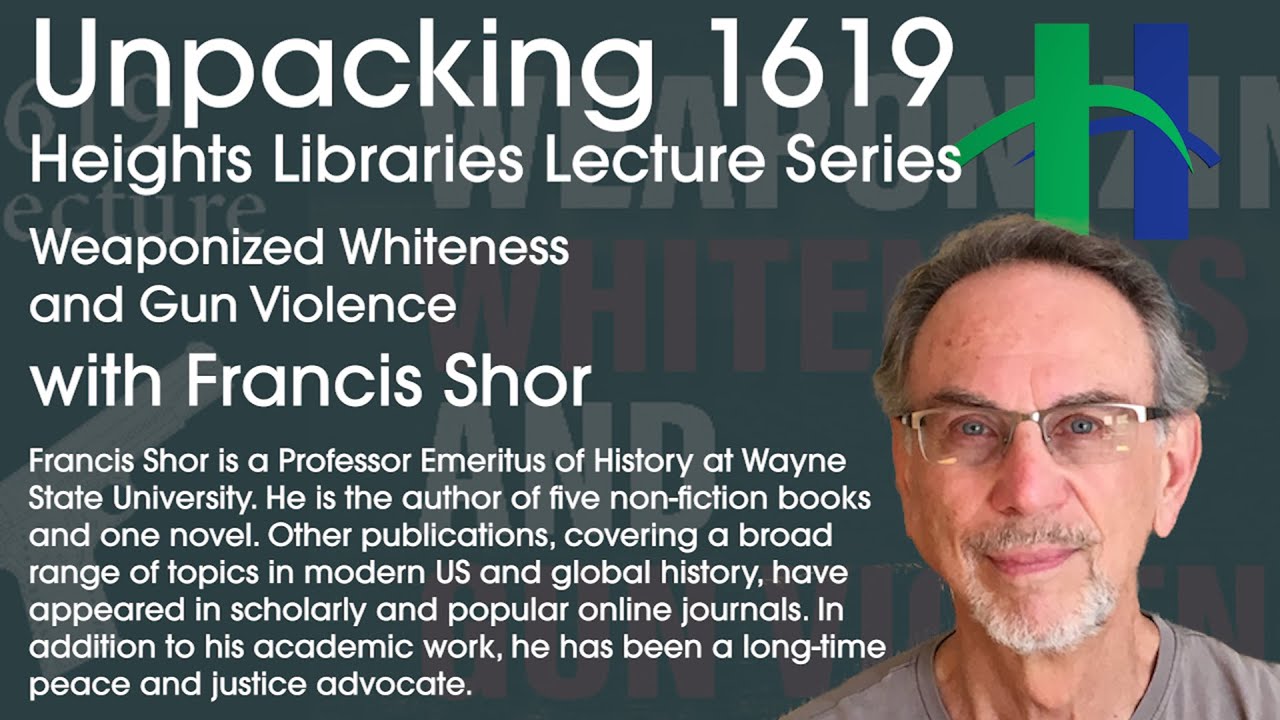
Fran Shor: Weaponized Whiteness and Gun Violence
Why does the United States have so much gun violence and why is it so difficult to overcome? Obviously, there are numerous contributing factors to the persistence of gun violence from the legacy of a frontier past to the proliferation of guns to toxic masculinity. However, one significant aspect, often overlooked, is the role of systemic racism. This power point presentation will explore the long history of racist currents in American gun violence. Francis Shor is a Professor Emeritus of History…

Chiamaka Echebiri on White Supremacy, Christy Lopez on Carceral Logic, Anna Preston on Prisons and Mental Health, a debate between Micheal Javen and Marie Gottschalk, and finally an article by Jack Norton from the "New York Review of Books."