
Browse All Records(204 total)
Deirdre Cooper Owens: Slavery Origins of Gynecology
Professor Deirdre Cooper Owens discusses her book, Medical Bondage: Race, Gender and the Origins of American Gynecology, which traces the origins of American reproductive health to slave hospitals. As white doctors expanded their practices onto plantations, quickly pregnancy and birth became the focus of their practices. Dr. James Marion Sims with other nineteenth-century gynecologists performed experimental caesarean sections, ovariotomies, and obstetric fistula repairs primarily on enslaved…
Jocelyn Simonson: Radical Acts of Justice
Professor Jocelyn Simonson talks about her book, Radical Acts of Justice: How Ordinary People Are Dismantling Mass Incarceration. Beginning with a close look at the ideological meaning behind calling the prosecution, “The People,” Prof. Simonson points out how the criminal justice systems defines “community.” By looking at several ways activists and volunteers engage in organized efforts centered around bail, court watching, and participatory defense, Prof. Simonson shows how justice is changing…
Robin Bernstein: Auburn Prison and the Murder that Shocked America
Professor Robin Bernstein discusses her book, Freeman’s Challenge: The Murder that Shook America’s Original Prison For Profit. Auburn Prison in Upstate New York was designed to be a factory prison, incorporating the area’s major industry into its walls. Through harsh conditions, solitary and silent confinement, and constant violence, the inmates’ lives were desolate ones of hard labor. Enter William Freeman who was convicted of a horse theft he insisted he did not commit. He suffered greatly in…
Antonia Hylton: Race and Insanity in a Jim Crow Asylum
Antonia Hylton discusses her book, Madness: Race and Insanity in a Jim Crow Asylum. Ms. Hylton’s extensive research into Crownsville Hospital in Maryland, a segregated asylum that was both hospital and prison, serves as physical example of racist systems and black resistance. Tracing the history of Crownsville was difficult since so many of the official records were destroyed and those that remained were in rough shape. She turned to oral history of those nurses and staff that worked there to…
Kidada E. Williams: Surviving Reconstruction
Kidada E. Williams discusses her book, I Saw Death Coming: A History of Terror and Survival in the War Against Reconstruction. Professor Williams begins by describing how she elevated and amplified the voices of the survivors of Klu Klux Klan terrorism. Mining Congressional Investigation reports and the Works Progress Administration interviews, the survivors recount the continued terrorism of ex-Confederates and other Southern whites intent upon destroying Freed People's success. Professor…
Laura Meckler: Shaker Heights History of Integration
Journalist Laura Meckler of the Washington Post discusses her book, Dream Town: Shaker Heights and the Quest for Racial Equity. Beginning with a historical overview of the Cleveland suburb and its uncanny ability to propel itself into the national spotlight, Ms. Meckler discusses how the suburb fought segregation and racial covenants to become one of the first integrated communities in Northeast Ohio. The desegregation of Shaker schools has been one of success and challenge, but through the…
Andrew McKevitt: Gun Rights and Consumerism
Professor Andrew McKevitt talks about his book, “Gun Country: Gun Capitalism, Culture, and Control in Cold War America.” America’s gun culture was not an inevitable outcome of the Second Amendment and Professor McKevitt explains why. Framing America’s obsession with guns as essentially a consumerist market, not unlike another other collectible or commodity, Prof. McKevitt uncovers one potential origin – post-War European military surplus. Professor Andrew McKevitt is the John D. Winters Endowed…
Lerone Martin: J. Edgar Hoover and the FBI's White Christian Nationalism
Lerone Martin discusses his new book, "The Gospel of J. Edgar Hoover: How the FBI Aided and Abetted the Rise of White Christian Nationalism." Prof. Martin argues that J. Edgar Hoover molded the FBI after his own personal and deeply held religious beliefs and crafted a culture where FBI Agents were defenders of a certain type of religious faith. Hoover solidified a vision of America that was founded on white Christian values, so that any deviation of politics or thought threatened the…
Stefanie Hunt-Kennedy: Colonial Slavery and Disability
Professor Stefanie Hunt-Kennedy discusses her book, “Between Fitness and Death: Disability and Slavery in the Caribbean,” which examines the relationship between disability, antiblack racism, and slavery in the sugar-producing colonies of the British Caribbean. Prof. Hunt-Kennedy explains how disability was a defining feature of slavery’s violence and it’s antiblack racism. Professor Stefanie Hunt-Kennedy, Associate Professor, Department of History at the University of New Brunswick. She…

Chiamaka Echebiri on White Supremacy, Christy Lopez on Carceral Logic, Anna Preston on Prisons and Mental Health, a debate between Micheal Javen and Marie Gottschalk, and finally an article by Jack Norton from the "New York Review of Books."
Sang Hea Kil: Covering the Border War
How the news media create crime, race, nation, and the USA-Mexico divide examines border newspaper coverage of the USA-Mexico divide and how the nation and immigration are racially imagined in crime news discourse, where whiteness is associated with order and brownness is associated with disorder in a variety of imaginative, nativist ways. By applying critical discourse analysis methodology to the Los Angeles Times, Arizona Republic, Albuquerque Journal, and Houston Chronicle during a peak epoch…
Alys Weinbaum: Slavery and Surrogacy
Alys Weinbaum, professor of English at the University of Washington, discusses her book, The Afterlife of Reproductive Slavery. Professr Weinbaum examines how the legal and cultural impact of Atlantic slavery defined slave reproduction and enslaved women as “biocapital.” This form of racialized capitalism changed human reproduction from kinship to “breeding.” How this ideology remains four centuries later in the emerging markets for female egg harvesting to the multimillion dollar international…
Christy Lopez: Police Reform and Carceral Logic
Christy Lopez draws on her work as a Deputy Chief in the Special Litigation Section of the Civil Rights Division at the U.S. Department of Justice to talk about Pattern or Practice Investigations with in police departments. How these investigations begin, how they work, and what their outcomes may be, are all unpacked by Professor Lopez. Additionally, Prof. Lopez describes her formulation of “carceral logic” and how it informs police reform efforts.
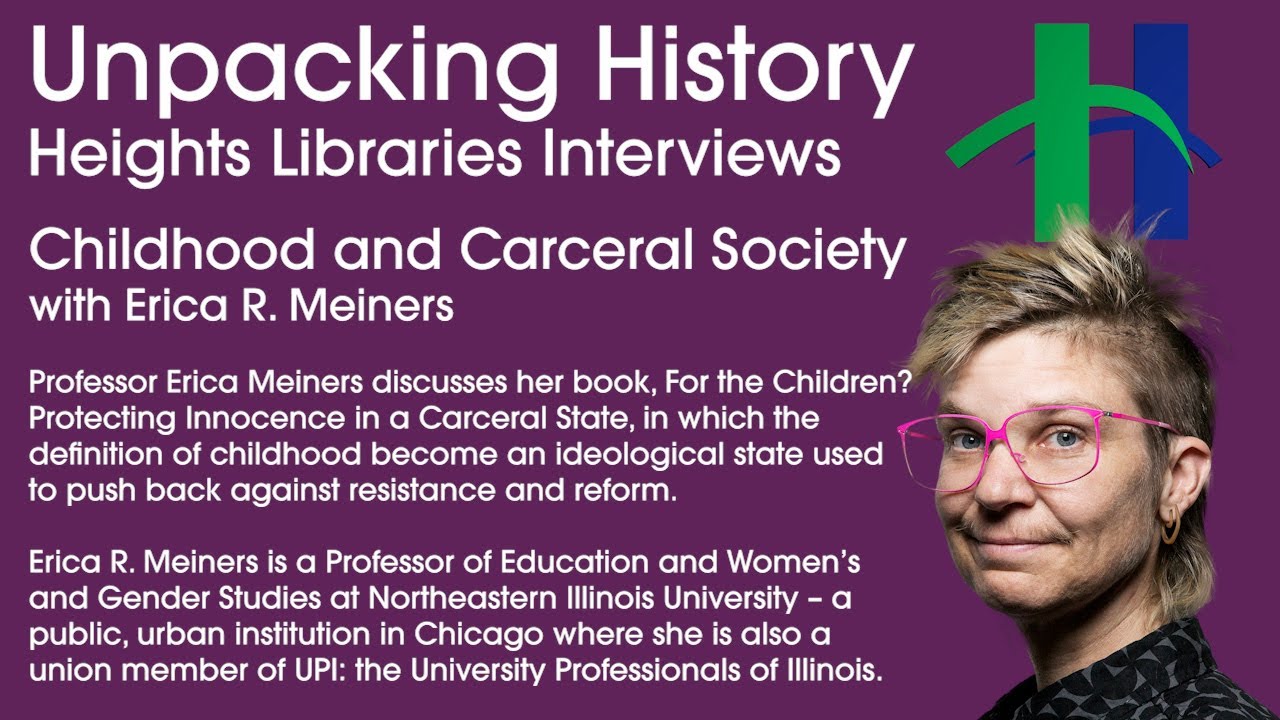
Erica Meiners: Childhood and Carceral Society
Erica R. Meiners is a Professor of Education and Women’s and Gender Studies at Northeastern Illinois University. Professor Erica Meiners discusses her book, For the Children? Protecting Innocence in a Carceral State, in which the definition of childhood become an ideological state used to push back against resistance and reform. Childhood, Meiners states, depends on social constructions and differ based on the group it refers to - freed slaves were talked about as children, while white wealthy…
Rana Hogarth: Eugenics After Slavery
Eugenicists’ study of mixed race people with Black and white ancestry did not emerge in a vacuum. Slavery not only gave rise to myths about mixed race people’s bodies that eugenicists would later study, but it also left behind an elaborate systems that eugenicists would rely on to classify mixed race people for years to come. This talk highlights slavery’s little studied role in the development of eugenicists’ opinions about the fitness of mixed race people with Black and white ancestry in the…
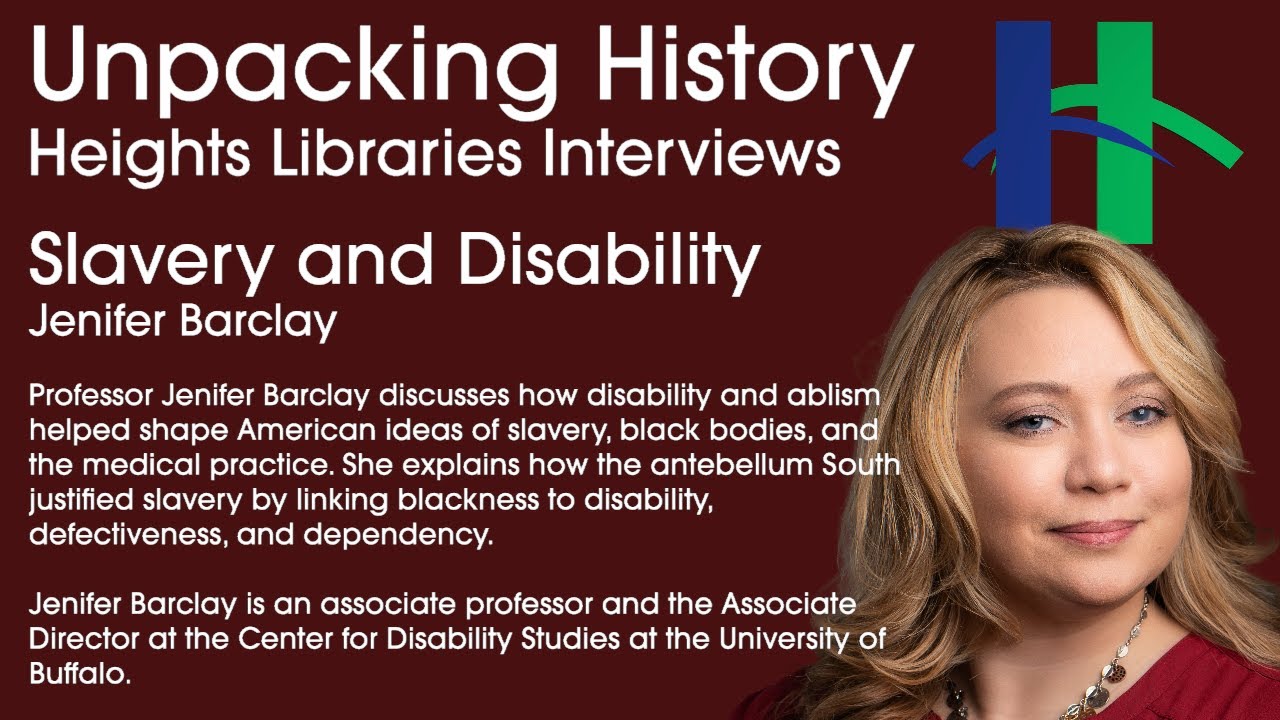
Jenifer Barclay: Slavery and Disability
Jenifer Barclay is an associate professor and the Associate Director at the Center for Disability Studies at the University of Buffalo. Professor Jenifer Barclay discusses how disability and ablism helped shape American ideas of slavery, black bodies, and the medical practice. She explains how the antebellum South justified slavery by linking blackness to disability, defectiveness, and dependency. Both proslavery and abolitionists used disability as a frame to further their arguments about the…
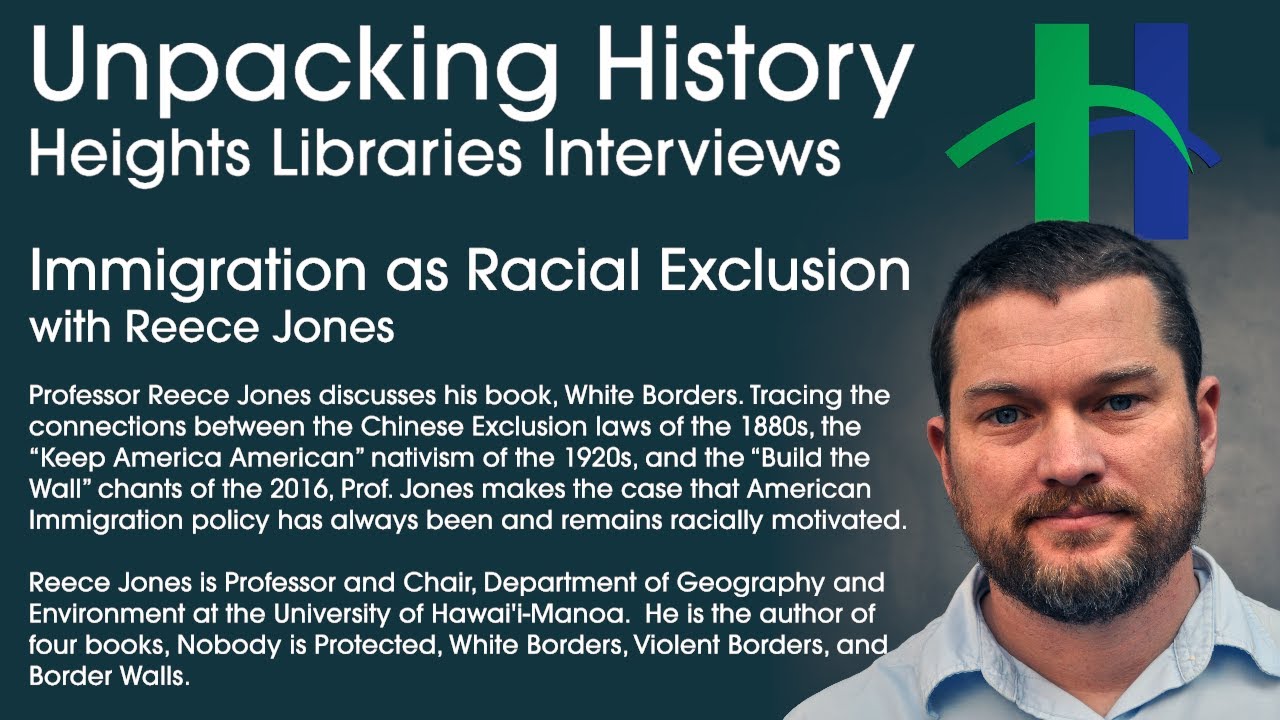
Reece Jones: Immigration as Racial Exclusion
Reece Jones is Professor and Chair, Department of Geography and Environment at the University of Hawai'i-Manoa. Professor Reece Jones discusses his book, White Borders. Tracing the connections between the Chinese Exclusion laws of the 1880s, the “Keep America American” nativism of the 1920s, and the “Build the Wall” chants of the 2016, Prof. Jones makes the case that American Immigration policy has always been and remains racially motivated. Looking at the scholars and politicians who used…
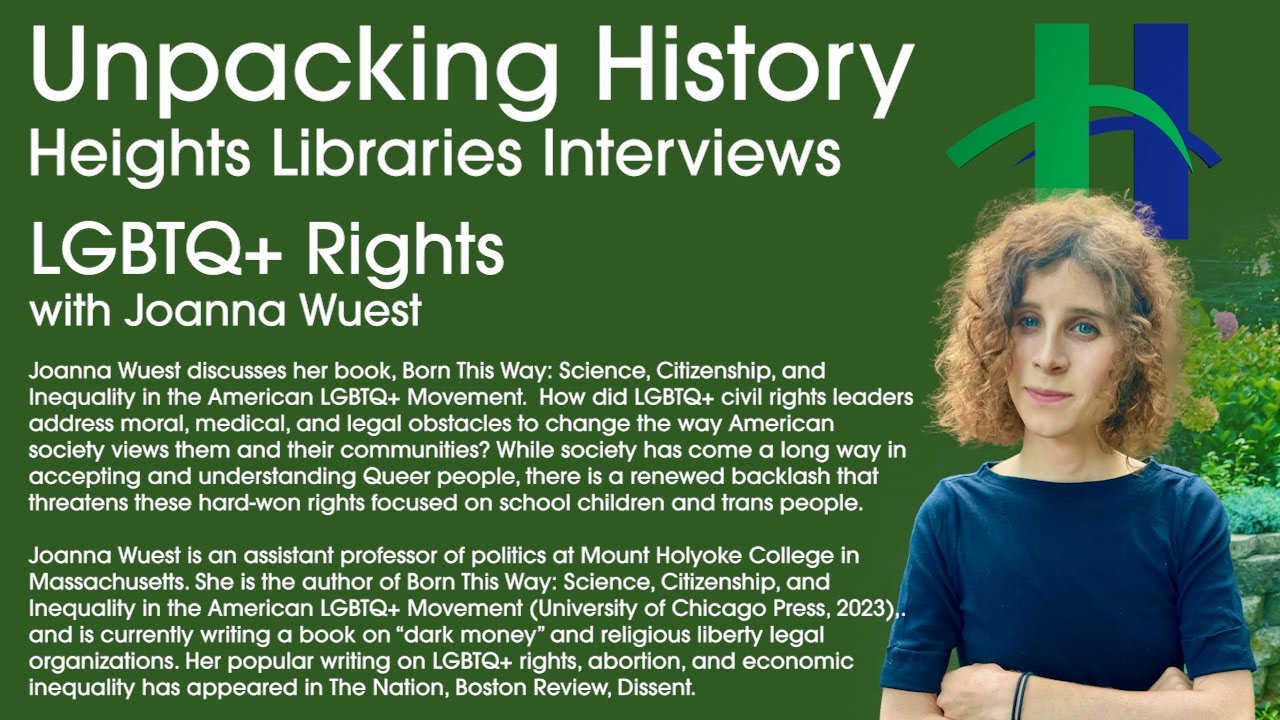
Joanna Wuest: LGBTQ+ Rights
Joanna Wuest is an assistant professor of politics at Mount Holyoke College in Massachusetts. Joanna Wuest discusses her book, Born This Way: Science, Citizenship, and Inequality in the American LGBTQ+ Movement. How did LGBTQ+ civil rights leaders address moral, medical, and legal obstacles to change the way American society views them and their communities? While society has come a long way in accepting and understanding Queer people, there is a renewed backlash that threatens these hard-won…
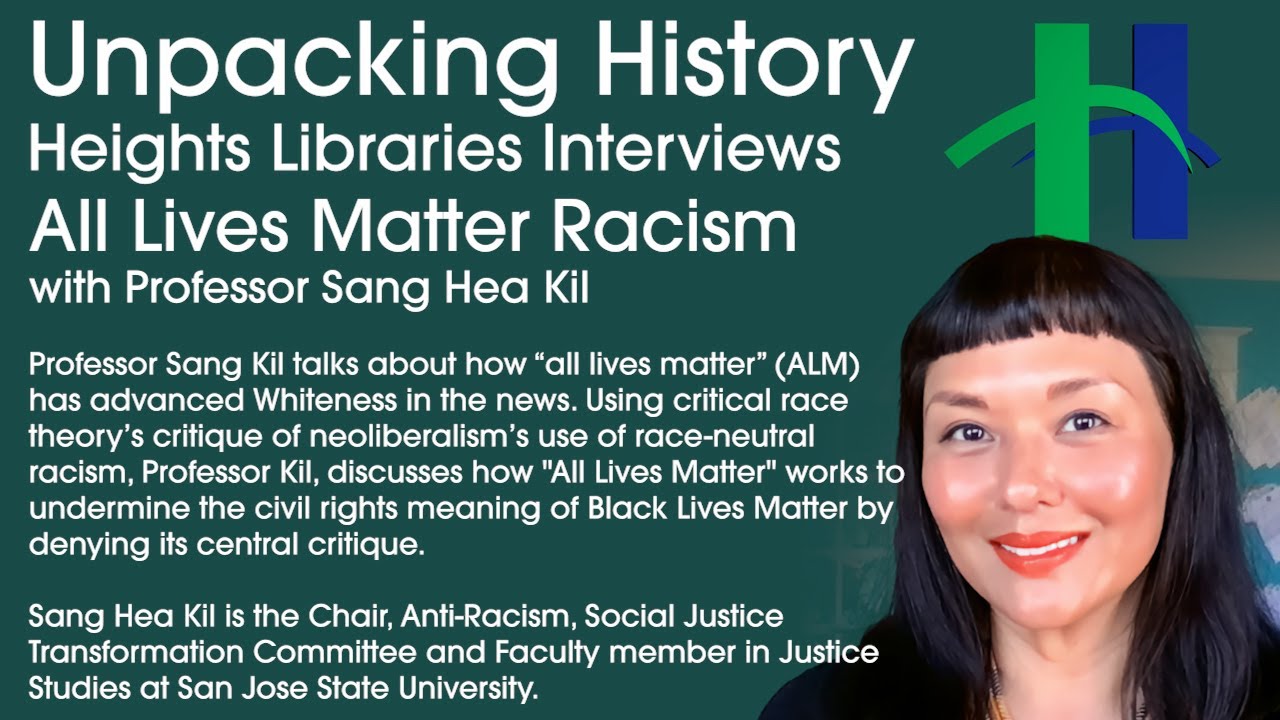
Sang Hea Kil: All Lives Matter Racism
Sang Hea Kil is the Chair, Anti-Racism, Social Justice Transformation Committee and Faculty member in Justice Studies at San Jose State University. Professor Sang Kil talks about how “all lives matter” (ALM) has advanced Whiteness in the news. Using critical race theory’s critique of neoliberalism’s use of race-neutral racism, Professor Kil, discusses how "All Lives Matter" works to undermine the civil rights meaning of Black Lives Matter by denying its central critique. Blue Lives…
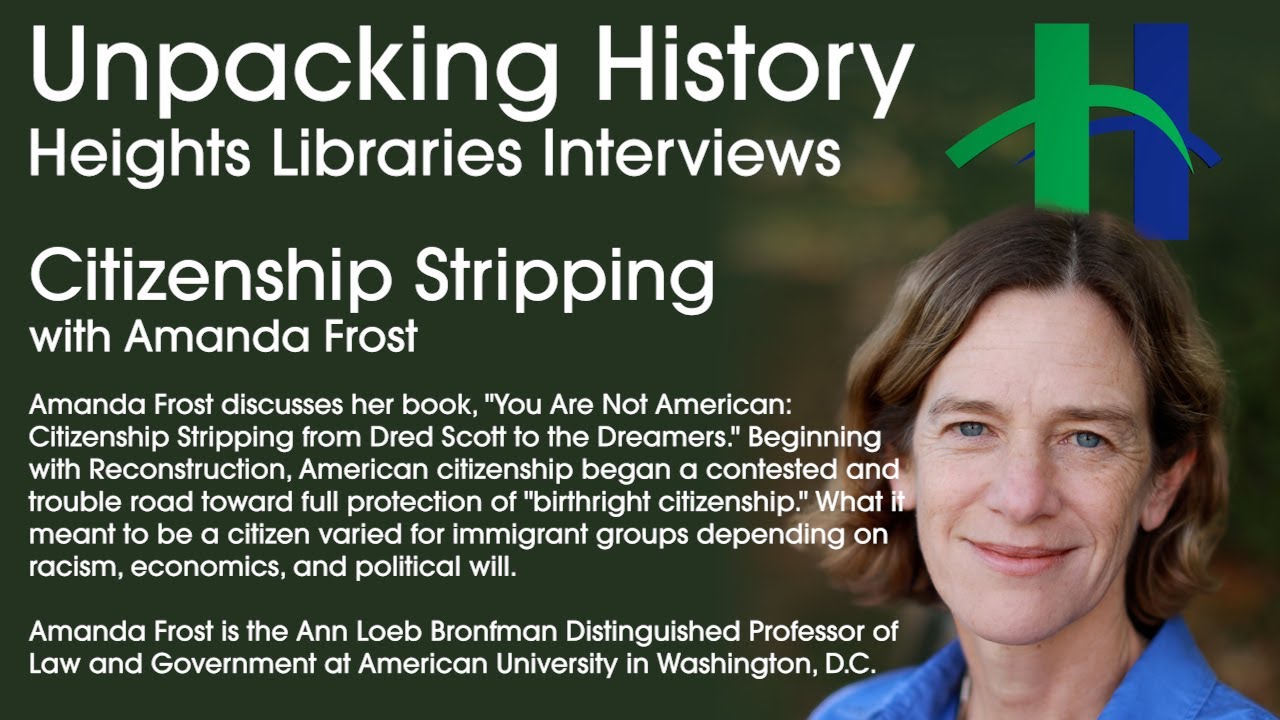
Amanda Frost: Citizenship Stripping
Amanda Frost is the Ann Loeb Bronfman Distinguished Professor of Law and Government at American University in Washington, D.C. Amanda Frost discusses her book, "You Are Not American: Citizenship Stripping from Dred Scott to the Dreamers." Beginning with Reconstruction, American citizenship began a contested and trouble road toward full protection of "birthright citizenship." What it meant to be a citizen varied for immigrant groups depending on racism, economics, and…
Caitlin O'Loughlin: Banned Books and Gay Erasure
For Banned Books week, join Caitlin O’Loughlin as she discusses her article, “It’s Just Filth: Banned Books and the Project of Gay Erasure.” She explains how proposed bans seek to erase queer peoples, how these bans impact teachers, and what teacher preparation programs can do to counter these acts of censorship.
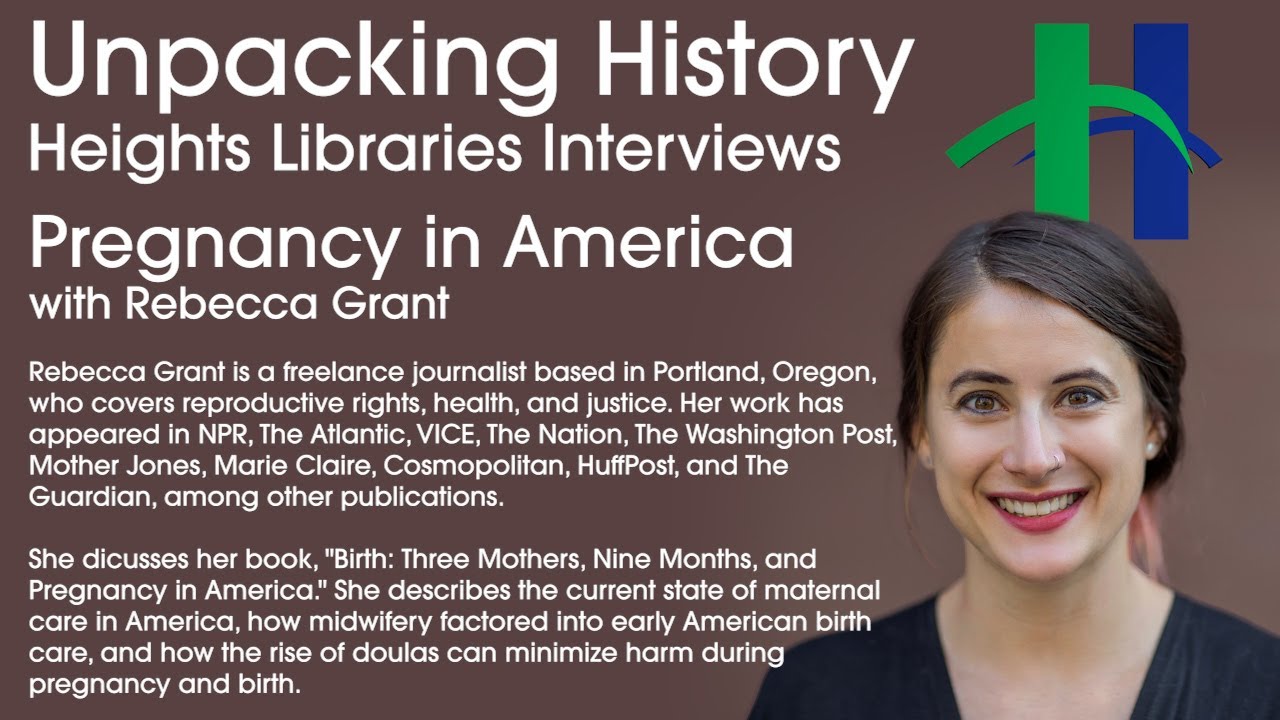
Rebecca Grant: Pregnancy in America
Journalist Rebecca Grant author of "Birth: Three Mothers, Nine Months, and Pregnancy in America" discusses her book. She describes the current state of maternal care in America, how midwifery factored into early American birth care, and how the rise of doulas can minimize harm during pregnancy and birth. Racial, social, and economic roadblocks create a system in maternal health defined in part by discrimination, judgment, and disparate treatment. But while things can seem desperate,…
Olivarius: Disease, Slavery, and Politics in New Orleans
Antebellum New Orleans sat at the heart of America’s slave and cotton kingdoms. But it was also the nation’s "necropolis," with epidemic yellow fever killing thousands each summer and leaving countless more orphaned, widowed, and bereaved. Olivarius shows how this city became stratified between the "acclimated" and "unacclimated," why these immunity labels mattered, and how yellow fever was mobilized by white elites to further divide and exploit the population.…
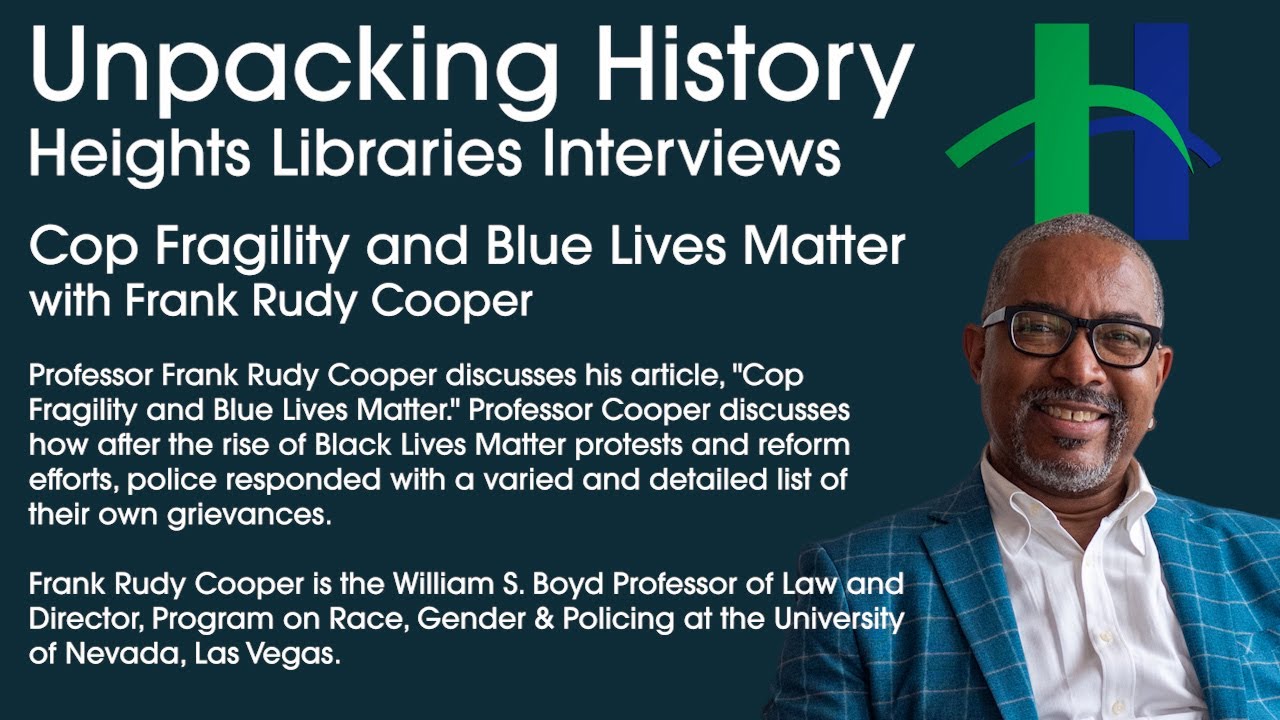
Frank Cooper: Cop Fragility and Blue Lives Matter
Frank Rudy Cooper is the William S. Boyd Professor of Law and Director, Program on Race, Gender & Policing at the University of Nevada, Las Vegas. Professor Frank Rudy Cooper discusses his article, "Cop Fragility and Blue Lives Matter." Professor Cooper discusses how after the rise of Black Lives Matter protests and reform efforts, police responded with a varied and detailed list of their own grievances. Blue Lives Matter emerged as a way to reframe police reform efforts by…
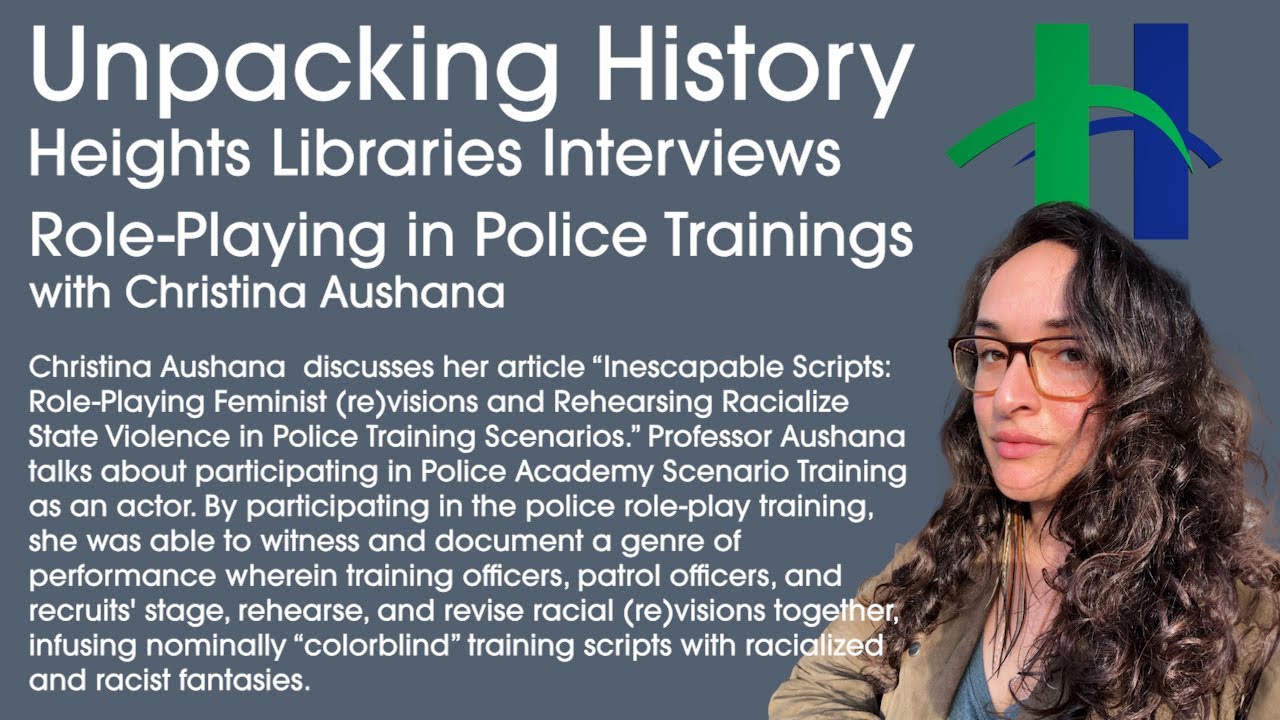
Christina Aushana: Role-Playing in Police Trainings
Christina Aushana discusses her article “Inescapable Scripts: Role-Playing Feminist (re)visions and Rehearsing Racialize State Violence in Police Training Scenarios.” Professor Aushana talks about participating in Police Academy Scenario Training as an actor. By participating in the police role-play training, she was able to witness and document a genre of performance wherein training officers, patrol officers, and recruits' stage, rehearse, and revise racial (re)visions together, infusing…
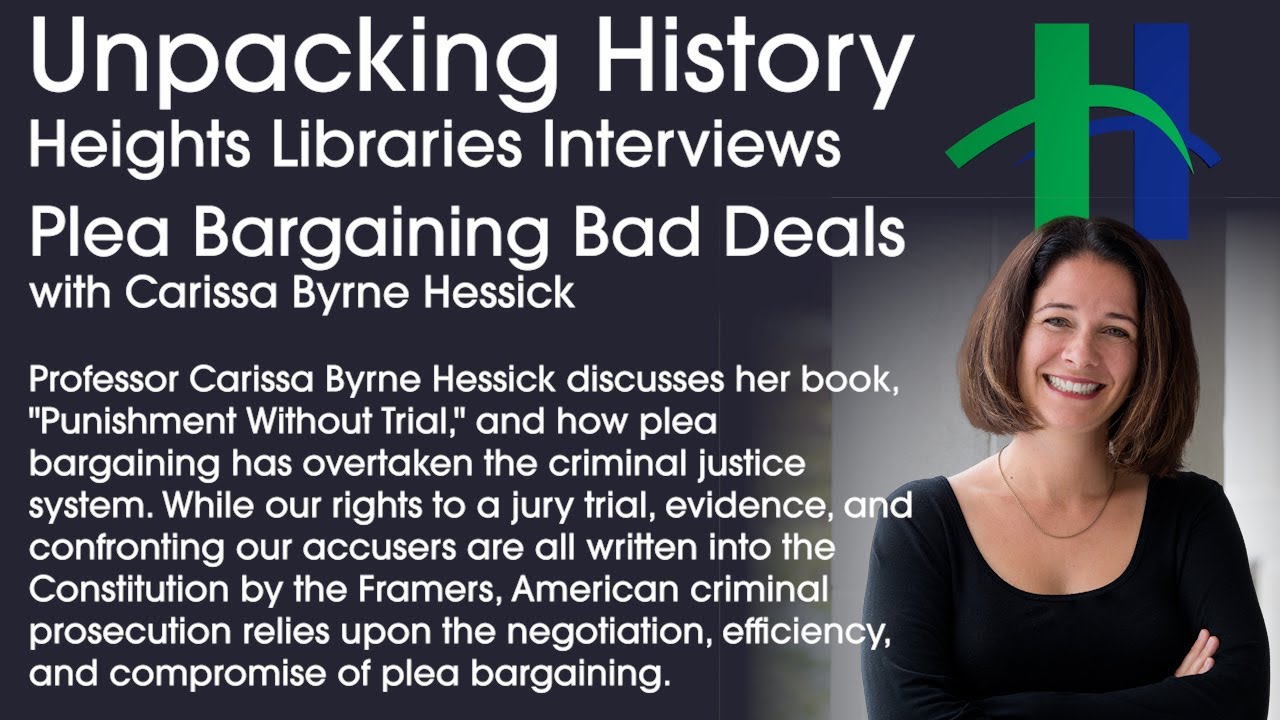
Carissa Byrne Hessick: Plea Bargaining Bad Deals
Carissa Byrne Hessick, Anne Shea Ransdell and William Garland "Buck" Ransdell, Jr. Distinguished Professor of Law, University of North Carolina School of Law. Professor Carissa Byrne Hessick discusses her book, "Punishment Without Trial," and how plea bargaining has overtaken the criminal justice system. While our rights to a jury trial, evidence, and confronting our accusers are all written into the Constitution by the Framers, American criminal prosecution relies upon the…
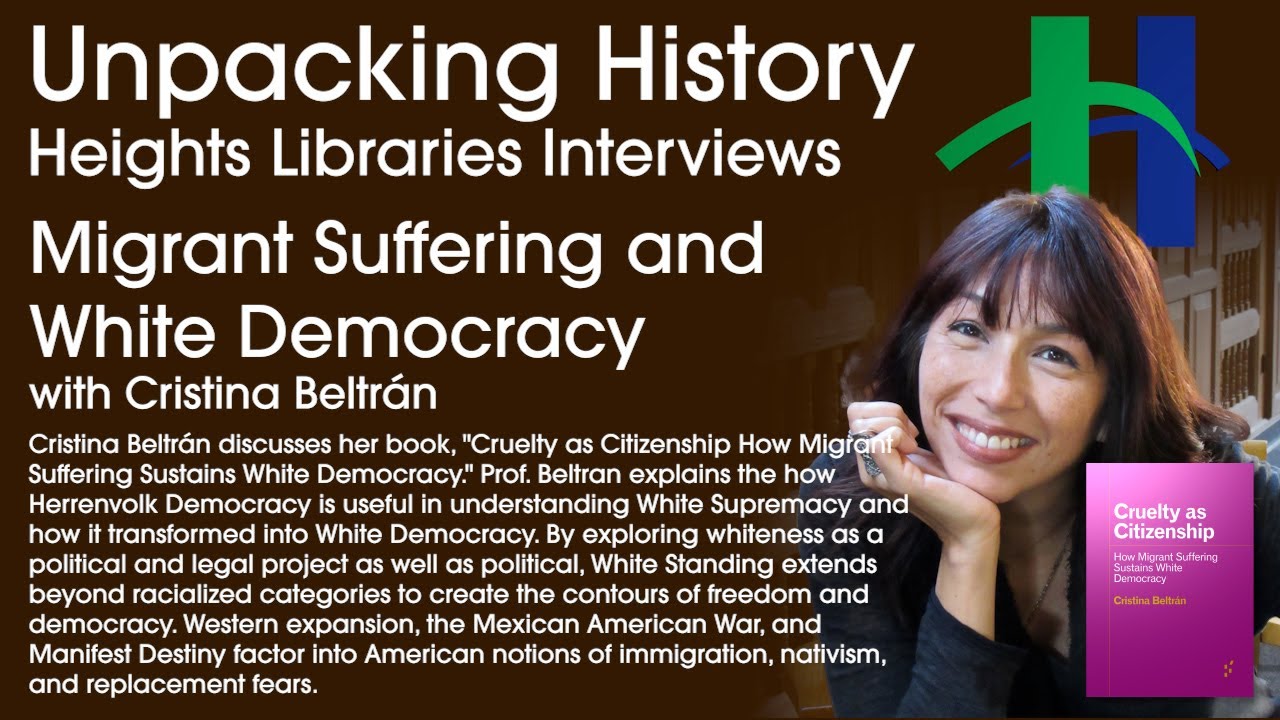
Cristina Beltran: Migrant Suffering and White Democracy
Cristina Beltrán is an associate professor in New York University’s Department of Social and Cultural Analysis. Cristina Beltrán discusses her book, "Cruelty as Citizenship How Migrant Suffering Sustains White Democracy." Prof. Beltran explains the how Herrenvolk Democracy is useful in understanding White Supremacy and how it transformed into White Democracy. By exploring whiteness as a political and legal project as well as political, White Standing extends beyond racialized…
Christopher Willoughby: What Modern Medicine Gained from Slavery
Medical science in antebellum America was a paradox: it presumed African Americans to be less than human yet still human enough to be useful as experimental subjects, as cadavers, and for use in the training of medical students. Professor Willoughby will discuss how false beliefs defined American medicine and how the impact is still being felt today. Christopher D.E. Willoughby is an Assistant Professor of African American and African Diaspora Studies at the University of Nevada, Las Vegas. He…
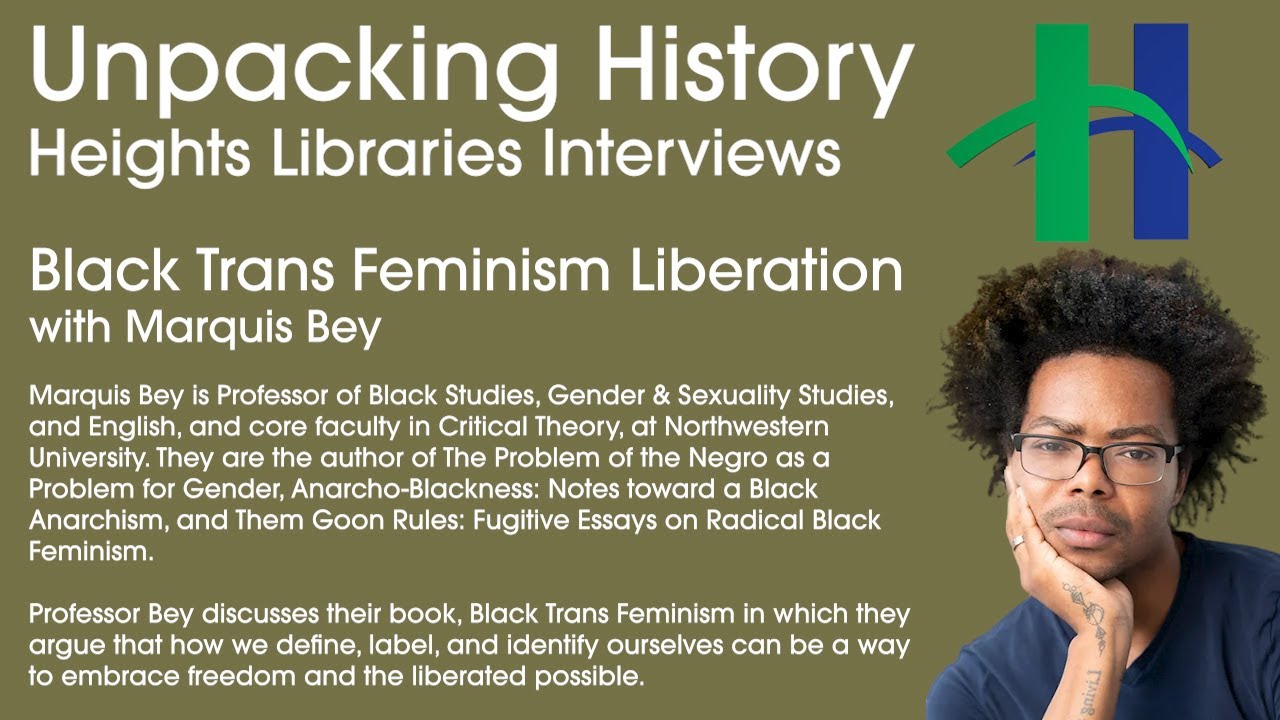
Marquis Bey: Black Trans Feminism Liberation
Marquis Bey is Professor of Black Studies, Gender & Sexuality Studies, and English, and core faculty in Critical Theory, at Northwestern University. Professor Marquis Bey discusses their book, BLACK TRANS FEMINISM in which they argue that how we define, label, and identify ourselves can be a way to embrace freedom and the liberated possible. First looking at how we are captured by systems and stereotypes when we see ourselves as defined by our race, gender, or sexuality, Dr. Bey sees the…
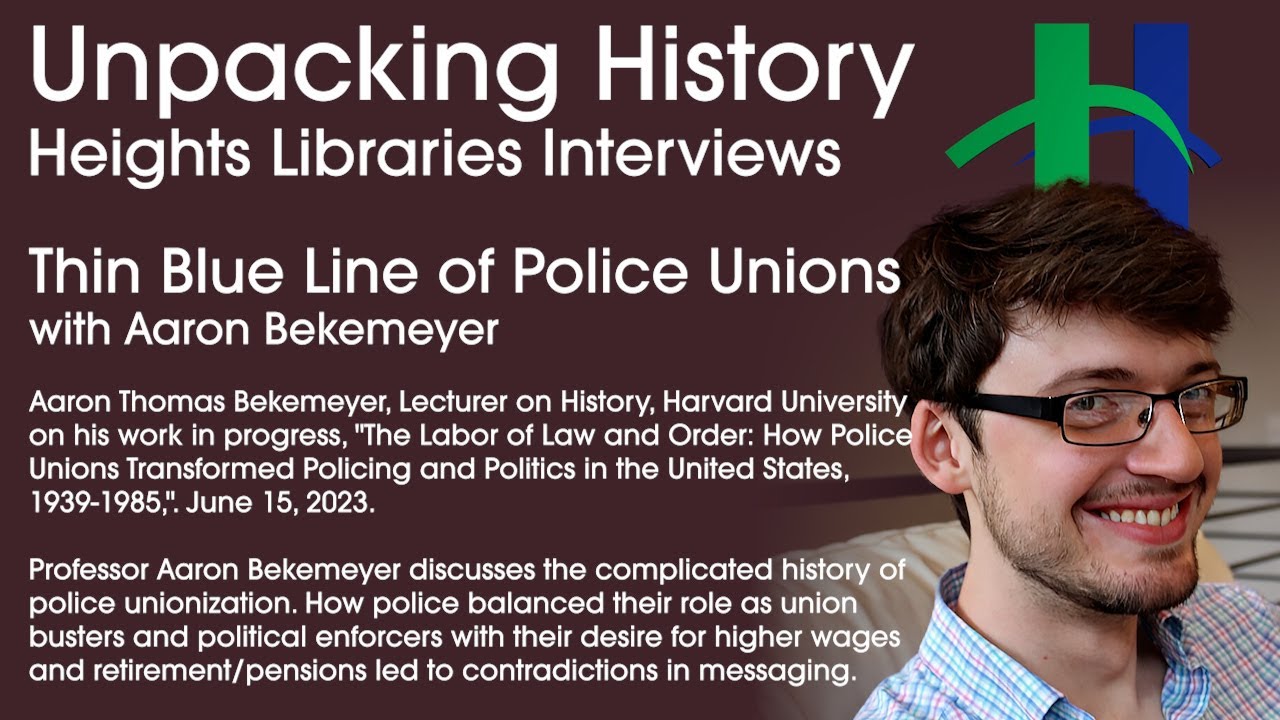
Aaron Bekemeyer: Thin Blue Line of Police Unions
Aaron Thomas Bekemeyer, Lecturer on History, Harvard University. Professor Aaron Bekemeyer discusses the complicated history of police unionization. How police balanced their role as union busters and political enforcers with their desire for higher wages and retirement/pensions led to contradictions in messaging. After both World Wars, American society changed in various ways and policing took on new meanings, in response to reformist challenges to political machine corruption and later the…